
Social housing tenants are among the hardest hit by the cost of living crisis. With low incomes consumed by basic housing costs, rising food, fuel, and energy prices have made managing day-to-day expenses an ongoing challenge.
Welsh housing associations are committed to supporting tenants through these financial challenges, working to ensure homes remain safe, suitable, and affordable.
Our new report ‘Bridging the gap’ reveals that the crisis has become a persistent struggle, where high essential expenses leave families without any financial safety net.
We surveyed housing associations across Wales to explore how social landlords are stepping up as a vital safety net, helping tenants manage debt, maximise their incomes, and stay in their homes during severe financial pressure.
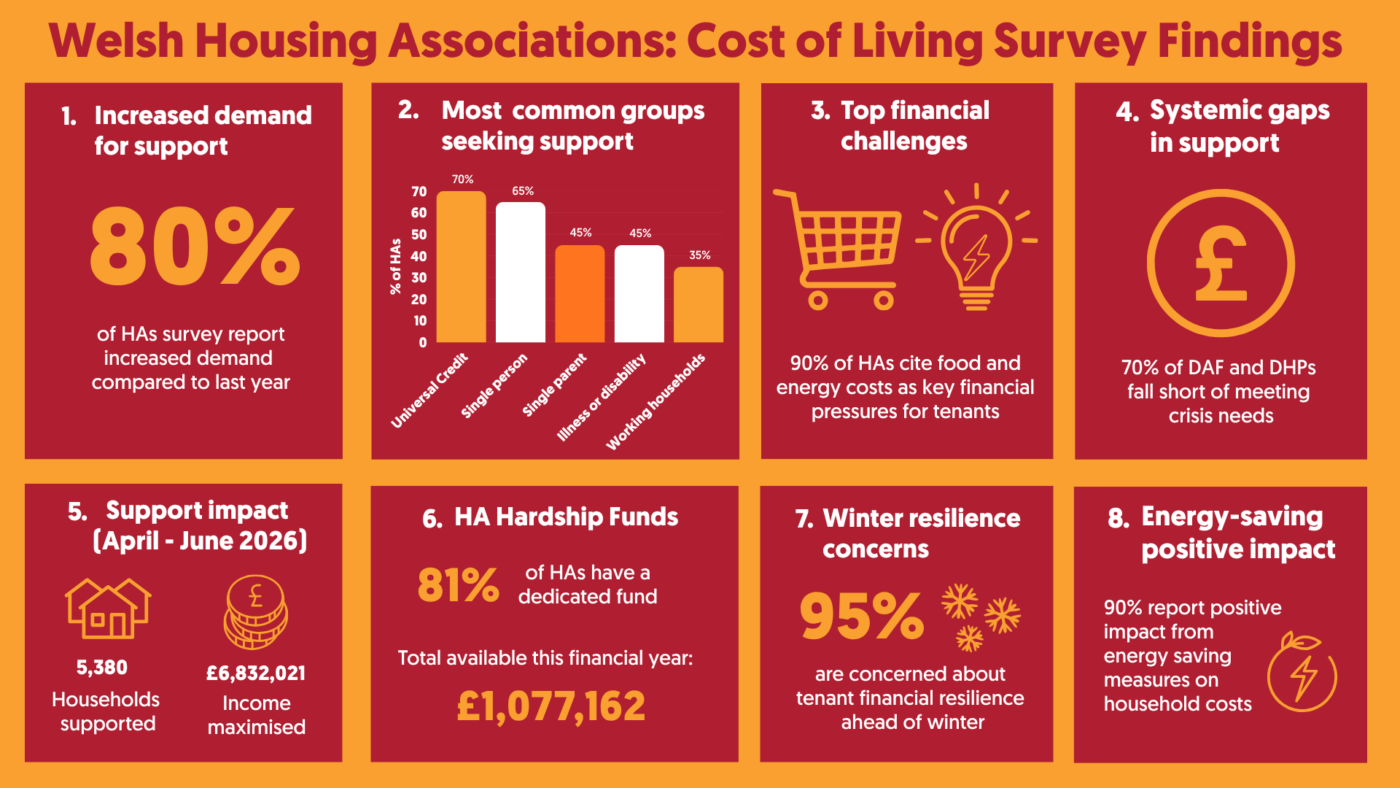
The findings highlight both the scale of hardship facing households in Wales and the impact of housing association support:
- Demand for support is surging: 80% of housing associations report an increase in demand for financial support compared to last year, with more than half reporting a significant rise.
- Food and energy remain the top pressures: 90% of housing associations identify high food and energy costs as the main financial challenges facing tenants.
- Hardship is reaching working families: While Universal Credit claimants (70%) and single-person households (65%) represent the largest groups seeking help, 35% of housing associations report that low-paid working households are increasingly falling into financial difficulty as prices remain high.
- Housing associations are delivering vital relief: Between April and June 2026 alone, housing associations supported 5,380 households, generating over £6.8 million in maximised income for tenants. Additionally, 81% of housing associations provide dedicated hardship funds, with over £1 million available for tenants this year.
- Growing fears for winter: 95% of housing associations are concerned about tenant financial resilience as colder weather approaches.
Preventative work in action
Housing associations are investing in long-term solutions to tackle poverty and build resilience:
- Energy Efficiency: Large-scale retrofitting and developing low-carbon homes lower bills and protect tenants from volatile energy markets.
- Employment & Skills Support: Targeted programmes help tenants break down barriers to work and move into sustainable employment, boosting household income.
The bottom line: We cannot compensate for a broken social security system
Despite preventative efforts, housing associations cannot absorb escalating demand indefinitely.
Energy efficiency and employment support build resilience, but social landlords cannot offset low incomes, high living costs, and a strained welfare system.
Frontline teams are facing mounting pressure, complex cases, and burnout as they operate in an increasingly reactive mode. Affordable housing and local interventions are essential, but they cannot replace an effective, robust national social safety net.
What needs to change
To protect households and build a resilient future, we need urgent UK and Welsh Government action on two fronts:
Immediate Support for Households in Crisis
- Guarantee our essentials: Ensure Universal Credit rates cover the actual cost of basic living essentials.
- Strengthen emergency funds: Expand eligibility and improve consistency for the Discretionary Assistance Fund (DAF) and Discretionary Housing Payments (DHPs) so all households in crisis are supported.
- Provide targeted energy relief: Introduce a social energy tariff, debt relief, and targeted support for households facing volatile bills.
Investing in Long-Term Resilience
- Recognise social housing as preventative infrastructure: Welsh Government should set out a long-term plan for housing that recognises social housing as essential preventative infrastructure. A long-term plan should support the delivery of more affordable homes, continued investment in existing homes and the services housing associations provide to strengthen financial resilience.
- Connect housing investment to local jobs: Welsh Government should develop a National Construction Skills Strategy linking housing development and retrofitting directly to training, apprenticeships, and sustainable local employment.